Content
SQL Interview Questions You Can Solve with AI (2026)
SQL interviews have not changed dramatically in 2026, but the bar has risen. Hiring managers expect candidates to write clean queries, reason about performance, and handle edge cases without hesitation. If you are preparing for a data analyst, data engineer, or backend developer role, you will almost certainly face questions covering joins, aggregations, window functions, and CTEs.
This guide walks through seven real interview questions, shows the SQL solutions, and explains how to use AI2SQL to accelerate your practice when you are stuck or want to explore variations quickly.
1. Find Duplicate Records in a Table
One of the most common warm-up questions. The interviewer wants to see that you know how to group and filter using HAVING.
Question: Given a users table with columns id, email, and created_at, write a query to find all email addresses that appear more than once.
What they are testing: GROUP BY combined with HAVING to filter aggregated results. A common mistake is putting the condition in WHERE instead of HAVING.
2. The Classic Self JOIN
Self joins trip up a lot of candidates because they require aliasing the same table twice.
Question: You have an employees table with columns id, name, and manager_id. Write a query that returns each employee alongside their manager's name.
What they are testing: Self JOIN logic and the difference between INNER JOIN (excludes employees with no manager) and LEFT JOIN (includes everyone). Always clarify whether top-level employees should appear in the result.
3. Running Total with Window Functions
Window functions are now expected at almost every SQL interview, especially for analyst roles.
Question: Given an orders table with order_id, customer_id, order_date, and amount, calculate the running total of revenue per customer ordered by date.
What they are testing: PARTITION BY to scope the window, ORDER BY inside OVER, and the ROWS frame clause.
4. Ranking with DENSE_RANK
Question: From a sales table with salesperson_id and revenue, return the top 3 salespeople per region.
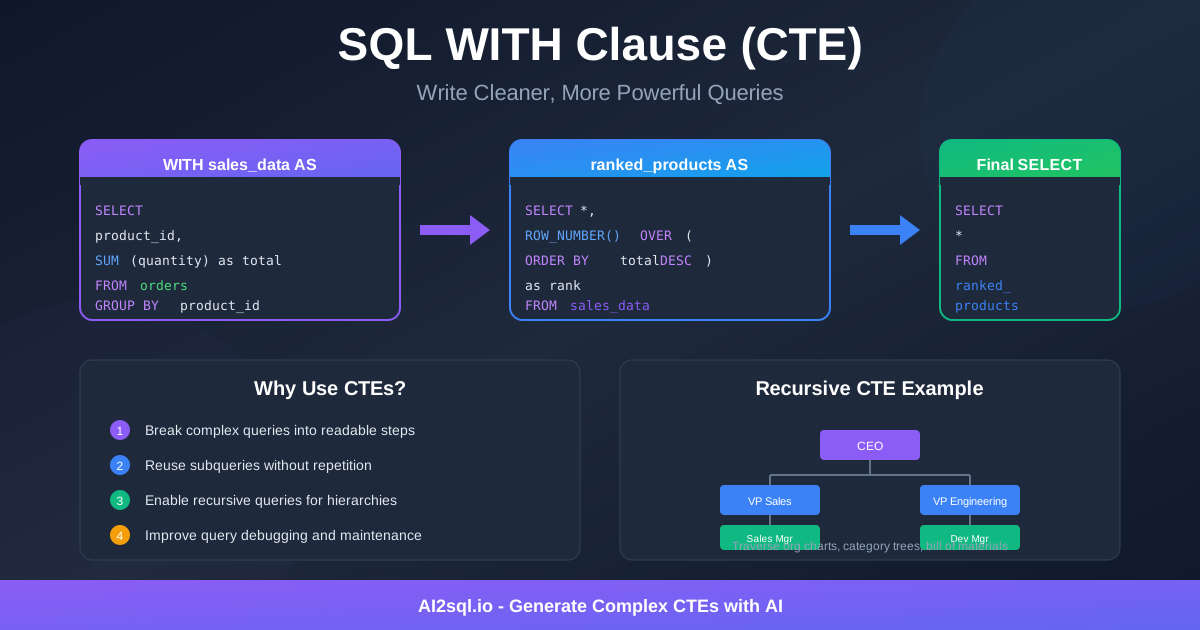
What they are testing: The difference between RANK, DENSE_RANK, and ROW_NUMBER. Using a CTE keeps the logic readable.
5. Finding the Second Highest Value
Question: Write a query to find the second highest salary from an employees table.
Or using OFFSET:
6. Month-over-Month Growth Rate
Question: Calculate the month-over-month percentage growth from a revenue table.
7. Users Who Completed All Steps in a Funnel
Question: Find all users who completed signup, onboarding_complete, and first_query.
How AI Can Speed Up Your SQL Practice
Writing these queries from scratch is the goal, but getting unstuck quickly matters during prep. Tools like AI2SQL let you type your question in plain English and get the SQL instantly. This is useful when you want to:
Quickly check whether your approach is correct
Generate variations of a problem to test your understanding
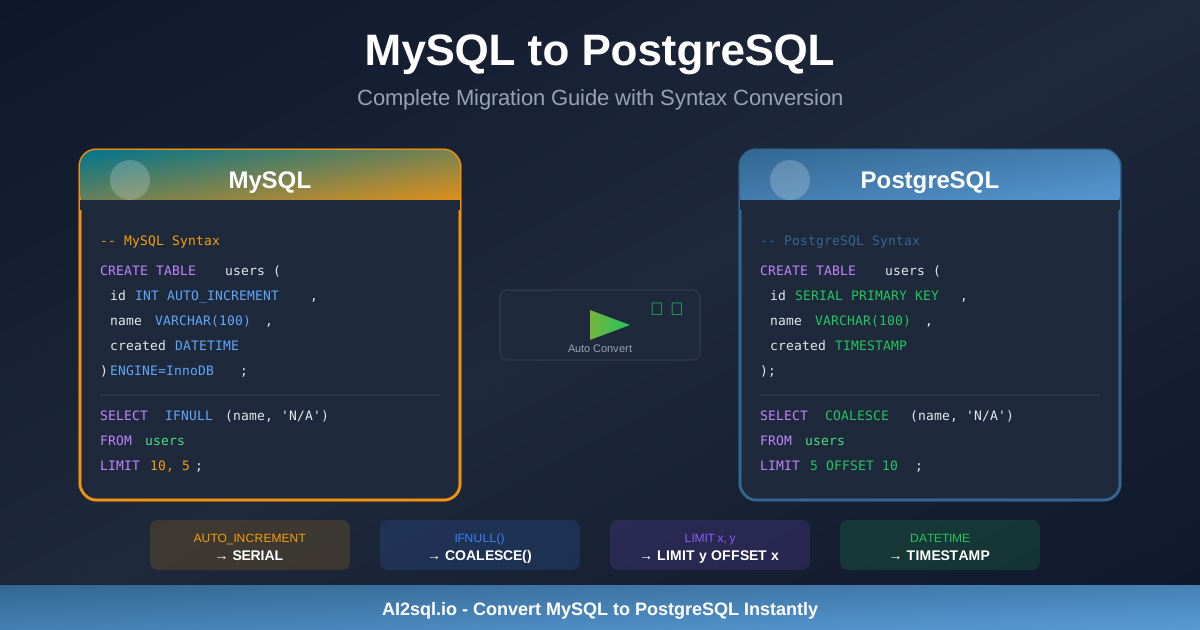
Learn how the same query looks in different databases
Get unstuck on syntax without losing your train of thought
What to Expect in 2026 SQL Interviews
Window functions are now baseline.
CTEs over subqueries.
Explain your reasoning.
Edge cases matter.
Performance awareness.
Practice Approach That Works
The most effective prep combines writing queries by hand, reviewing errors, and generating variations. Use AI2SQL when you want to quickly prototype or check a variation. Master these seven patterns and you will be prepared for most SQL interviews in 2026.