/

/

You Don't Need to Learn SQL Syntax — AI Writes It For You

Content

You Don't Need to Learn SQL Syntax — AI Writes It For You

You Don't Need to Learn SQL Syntax — AI Writes It For You

You Don't Need to Learn SQL Syntax — AI Writes It For You

The Question Everyone on r/learnSQL Is Asking

Every week, someone posts asking for the best course to learn SQL. Here is the thing nobody says out loud: memorizing SQL syntax is a solved problem. AI solves it.

The Difference Between Concepts and Syntax

  • SQL concepts — understanding what a JOIN does, what aggregation means, when to use a subquery vs a CTE. These take time to develop.

  • SQL syntax — remembering that GROUP BY comes after WHERE, that HAVING filters aggregates. This is trivia that AI handles.

What AI-Assisted SQL Actually Looks Like

Example 1: Basic Filtering

What you type:

Show me all customers from California who signed up in the last 90 days and have placed at least one order

What AI2SQL generates:

SELECT c.customer_id, c.name, c.email, c.signup_date
FROM customers c
INNER JOIN orders o ON c.customer_id = o.customer_id
WHERE c.state = 'CA'
  AND c.signup_date >= CURRENT_DATE - INTERVAL '90 days'
GROUP BY c.customer_id, c.name, c.email, c.signup_date
HAVING COUNT(o.order_id) >= 1;

Example 2: Aggregation and Ranking

Show me the top 5 products by total revenue this quarter, grouped by category
SELECT p.category, p.product_name, SUM(oi.quantity * oi.unit_price) AS total_revenue
FROM order_items oi
INNER JOIN products p ON oi.product_id = p.product_id
INNER JOIN orders o ON oi.order_id = o.order_id
WHERE o.order_date >= DATE_TRUNC('quarter', CURRENT_DATE)
GROUP BY p.category, p.product_name
ORDER BY total_revenue DESC
LIMIT 5;

Example 3: Finding Gaps in Data

Find all customers who have never placed an order
SELECT c.customer_id, c.name, c.email
FROM customers c
LEFT JOIN orders o ON c.customer_id = o.customer_id
WHERE o.order_id IS NULL;

Example 4: Year-Over-Year Comparison

Compare this month's total sales to the same month last year.
WITH monthly_sales AS (
  SELECT DATE_TRUNC('month', order_date) AS month, SUM(total_amount) AS revenue
  FROM orders
  WHERE order_date >= DATE_TRUNC('month', CURRENT_DATE) - INTERVAL '1 year'
  GROUP BY DATE_TRUNC('month', order_date)
)
SELECT curr.revenue AS current_revenue, prev.revenue AS previous_revenue,
  ROUND(((curr.revenue - prev.revenue) / prev.revenue) * 100, 2) AS pct_change
FROM monthly_sales curr
LEFT JOIN monthly_sales prev ON curr.month = prev.month + INTERVAL '1 year'
WHERE curr.month = DATE_TRUNC('month', CURRENT_DATE);

Traditional Learning Path vs. AI-Assisted Approach

Traditional Path

  • Week 1-2: SELECT, WHERE, ORDER BY

  • Week 3-4: JOINs

  • Week 5-6: GROUP BY, HAVING

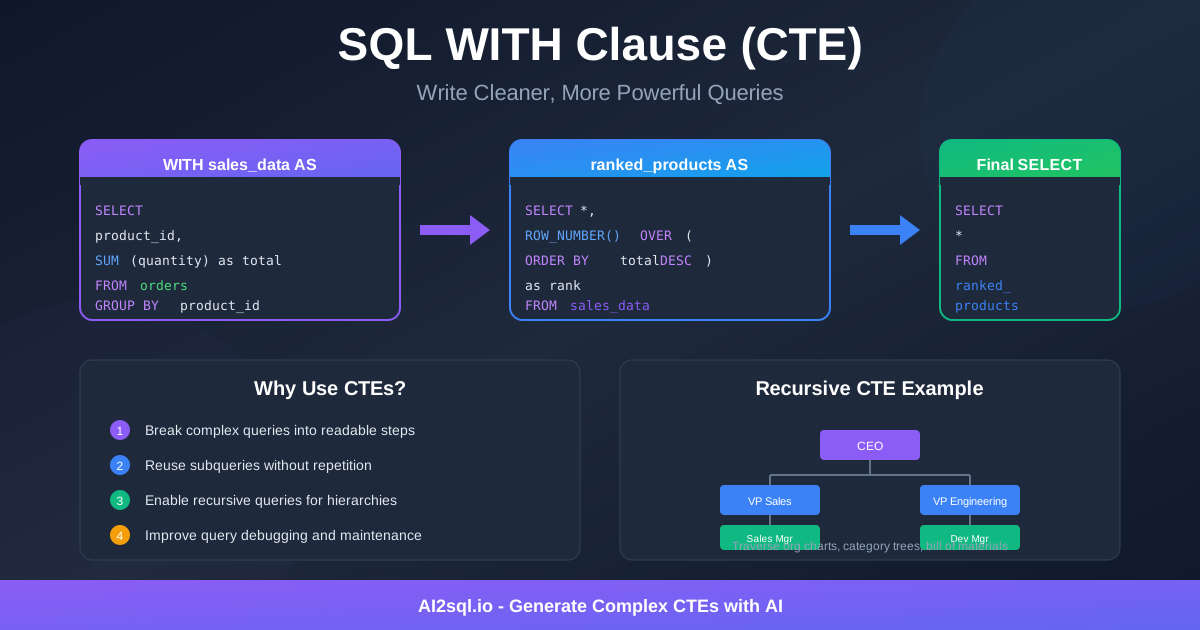
  • Week 7-8: Subqueries, CTEs, window functions

  • Month 3+: Still Googling syntax

AI-Assisted Path

  • Day 1: Understand what SQL does

  • Day 2: Start using AI2SQL with your actual database

  • Week 1: Writing useful queries with help

  • Month 2+: Syntax intuition from reading AI-generated queries

What You Still Need to Understand

  • How JOINs work

  • What GROUP BY actually does

  • The difference between WHERE and HAVING

  • NULL behavior

The Practical Takeaway

Spend one afternoon learning the four concepts above, then open AI2SQL and start describing queries against data you actually care about. You will learn more from 20 AI-generated queries on real problems than from completing a structured course.


Share this

More Articles

More Articles

More Articles